Plumbing Problems; Sometimes your plumbing smells really bad. We don’t mean that your toilet isn’t flushing right or your pipes are leaking, either. We’re being literal. Sometimes your plumbing just… smells bad. Sometimes it even smells really bad. Smelly plumbing problems happen for all kinds of reasons, some more obvious than others. No matter the cause, no one should have to deal with nose-wrinkling, stomach-churning plumbing aromas in their home.
To get rid of any unpleasant plumbing smells, we present the four most common reasons your plumbing smells bad and how to avoid and prevent them.
All kinds of things can damage your sewer line and as a plumbing problems. Clogs can build up until the pressure forces the line to burst. Tree roots could grow through the line. The line itself could sink into the ground due to soil conditions and split. A broken sewer line is leaking sewage. Sewage stinks. The smell of sewage coming from your drains and outside our home could be the biggest sign of a sewer line breach.
If you think you have sewer line breach, look for constantly clogging toilets, gurgling sounds from drains, and pest problems. Unfortunately, there are no easy, reliable DIY fixes for a sewer line breach.
You toss all kinds of stuff into your garbage disposal. That isn’t necessarily a problem; it’s there to help you… dispose of garbage, after all. Unfortunately, however, without regular cleaning and maintenance, debris can build up on the inside of garbage disposals over time. The food waste that clings to the inside of your disposal may develop an unpleasant stench.
There are a number of different ways to clean your garbage disposal. However you decide to clean your disposal, make absolutely sure you unplug it first! After that, a little dish soap, water, and a sponge should be all you need to clean it out. You can also try baking soda and vinegar. Once you’ve cleaned your disposal, try tossing some ice and citrus peels inside the drain and running the disposal.
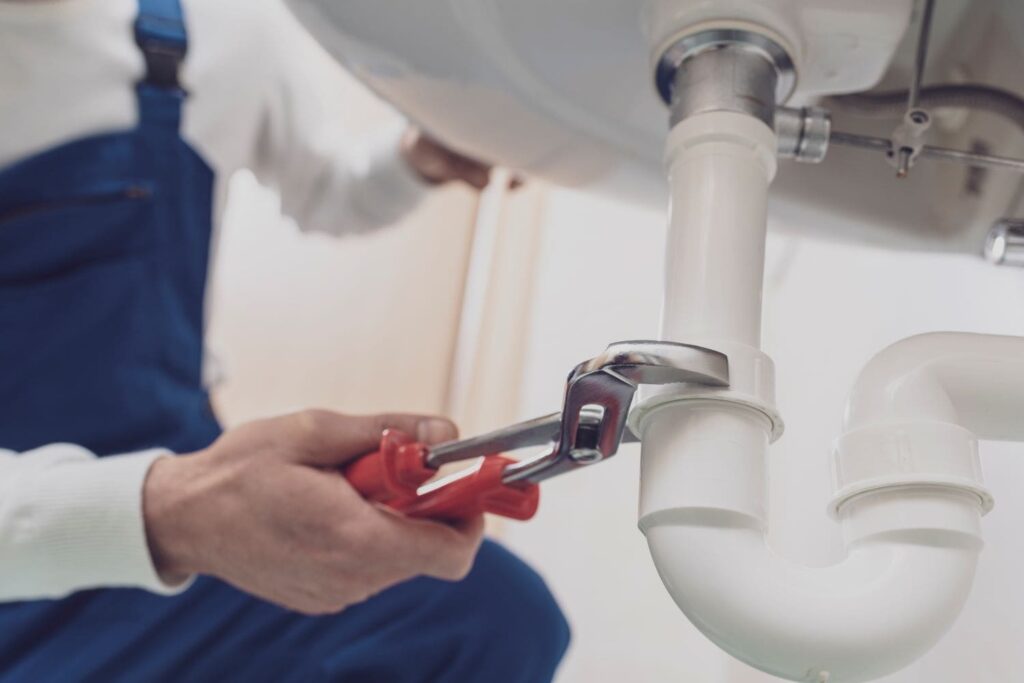
The p-trap is the (oddly appropriately named) “p” or “u”-shaped portion of pipe found underneath your sinks, showers, and other plumbing fixtures. The p-trap holds enough water to block dangerous sewer gas and odors from coming up and out of your drain.
If you use any of your showers or toilets infrequently, their p-traps could dry out. Without enough water in the p-traps to block it, smelly sewer gasses could rise up through your pipes. All you need to do to fix the problem is cycle water through your infrequently used fixtures.
If your shower drain is stinky, it could be because of biofilm build-up. Over time,the accumulation of waste from shower products like oil, shampoo, soap, or creams can turn into a residue called “biofilm.” When biofilm accumulates in the drain, natural bacteria will begin to cling to and feed on it. What you’re smelling is that biofilm bacteria.
Fortunately, biofilm treatment is easy. All you’ll need to do is remove the built-up bacteria using natural cleaner. Pour five to ten quarts of hot (but not boiling) water down the drain. Follow that by a cup of white vinegar and a half cup of baking soda. Let it sit. Two hours later, run another pot of hot water down the drain. The biofilm should be cleared and the stench removed.